Ask five people for the best places to stay in Jibhi and you will get five different villages. That is because "Jibhi" is often used loosely for a whole stretch of the Banjar valley in Himachal's Tirthan region, from the market by the river right up the road towards Jalori Pass. Each part has its own character: the sound of water in Jibhi itself, orchards and quiet in Ghiyagi, small hamlets around Tandi, and snow views in Shoja.
This guide takes the area one stop at a time, explains who each suits, and shows where The Vacay Homes stays sit, only where our listings actually state the location. If you are deciding between a homestay and a hotel, our earlier post on why a Jibhi homestay beats a hotel answers that. Here, the question is simply where.
The Jibhi area at a glance
Area
Roughly where
Feel
Best for
Jibhi village
On the river, by the market
Walkable, riverside, cafés nearby
First visits, families, groups
Ghiyagi
A few km up the Jalori road
Quiet, orchards, forest
Couples, longer slow stays
Tandi
Small hamlet in the Jibhi area
Village life, very peaceful
Travellers who want total quiet
Shoja
Higher up, near Jalori Pass
Cooler, wide mountain views, snow in winter
Hikers, snow lovers
Jibhi village: the best places to stay in Jibhi for most first-timers
Jibhi village is where most people base themselves, and for good reason. The stream runs right through it, the market has small cafés and shops, and two of the most-loved short outings are on foot or a few minutes away: Jibhi Waterfall and the rock pool everyone calls Mini Thailand. You can arrive, drop your bags and be by the water within minutes, without needing a car for every little thing.
All of the current Vacay Homes stays in this valley are listed simply as Jibhi, so this is where you will find them.
Riverside Homestay with Book Cafe
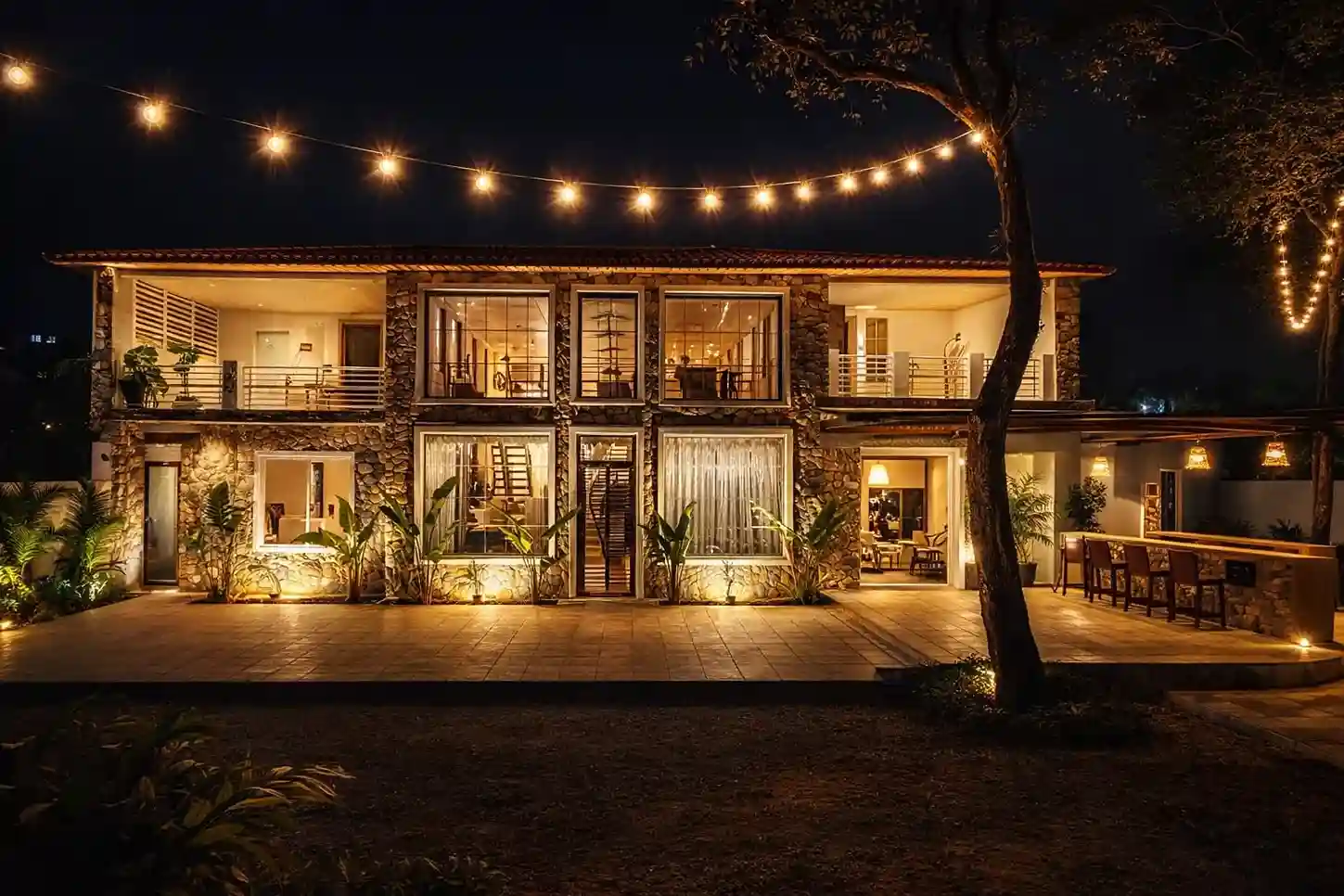
The Riverside Homestay with Book Cafe sits by the river in the midst of Jibhi market. River access is about 20 steps away, Jibhi Waterfall is roughly a five-minute walk, and Mini Thailand is about seven minutes by car, according to the listing. It has four rooms, each with its own entry and ensuite bathroom: two duplex attic rooms with balconies that sleep four each, and two ground-floor rooms with garden access and a private kitchenette. The whole property takes up to 16 guests, and the room price starts from ₹3,500 a night. There is a garden with a pond, a book café with a small library, bonfire evenings (chargeable) and vegetarian meals on site. We have written about it in more depth in our riverside homestay in Jibhi story. If you only need one room, the Room with Kitchen in Riverside Homestay is listed separately.
Family/Duplex Rooms by the River
For bigger groups, the Family/Duplex Rooms by the River are about 800 metres from Jibhi Market, with Jibhi Waterfall around a five-minute walk. The listing describes attic, duplex, family room types with balconies and river or garden views, plus a garden, bonfire area and on-site café. It is pet-friendly and listed from ₹5,500. There is also a Deluxe Room by the river, listed from ₹3,200, for couples on a tighter budget.
A-Frame Glass Treehouse Cabins and glass rooms
If you want something more unusual, the A-Frame Glass Treehouse Cabins are one-bedroom treehouse-style units that sleep up to four, with mountain views, a hammock, outdoor dining, heating and a bonfire. They are listed from ₹7,500. The Glass Room with Balcony is listed from ₹5,900.
Cottages by the Jibhi River
The Cottages by the Jibhi River offer river and mountain views, private balconies, heating, Wi-Fi, a workspace and an on-site café, and they are pet-friendly. They are listed from ₹3,500.
Ghiyagi: orchards and a slower pace
Drive a few kilometres up the road towards Jalori Pass and you reach Ghiyagi. The houses thin out, apple orchards and deodar forest take over, and evenings are noticeably quieter than in Jibhi market. It suits couples and anyone staying a week or more who is happy to drive down for supplies and cafés.
We do not currently have a listing that names Ghiyagi as its location. Our Jibhi stays are a short drive away, so you can enjoy Ghiyagi's forest walks by day and come back to the river at night.
Tandi: village life in the Jibhi area
Tandi is a small hamlet within the wider Jibhi area. There is not much to "do" in the tourist sense, and that is the appeal: fields, old village houses, and a glimpse of everyday mountain life. The walk to nearby villages is pleasant, and you will hear more birdsong than traffic.
Again, none of our listings names Tandi specifically. If village quiet is what you are after, the cottages and treehouse cabins listed in Jibhi give you a similar sense of calm with the convenience of the market close by.
Shoja: closer to the snow
Shoja sits higher up the road, a few kilometres below Jalori Pass. It is cooler, the views across the valley are broad, and in winter it often gets snow when Jibhi does not. It is the natural base for the walk from Jalori Pass to Serolsar Lake, or the climb to the ruins of Raghupur Fort for wide Himalayan views.
We do not have a stay listed in Shoja at present. Shoja and Jalori Pass make an easy day trip from Jibhi when the road is open.
How to choose your base
There is no single answer to the best places to stay in Jibhi; it depends on the trip you have in mind.
· First trip, family or group: stay in Jibhi village, close to the river, market and waterfall.
· Couples wanting quiet: a cottage or treehouse cabin in Jibhi, with day trips up to Ghiyagi.
· Snow and hikes: base in Jibhi and drive up to Shoja and Jalori Pass early in the day.
· Working remotely: pick a stay that lists Wi-Fi and power backup, such as the Jibhi River cottages.
Practical information
How to reach Jibhi
Most travellers take an overnight bus from Delhi to Aut, just past Mandi, then a taxi of roughly an hour and a half via Banjar to Jibhi. By road from Delhi it is around 500 km. The nearest airport is Bhuntar, near Kullu, roughly two hours away by road.
Best time to visit
March to June brings pleasant days and blossom; September to November is clear and crisp. Winter (December to February) can bring snow, especially around Shoja, and Jalori Pass may close after heavy snowfall. The monsoon, July and August, is green but landslides can disrupt roads.
FAQs
Which area is best for a first visit to Jibhi?
Jibhi village itself. You are close to the river, cafés, Jibhi Waterfall and Mini Thailand, and most stays are here.
Is Shoja better than Jibhi for snow?
Shoja is higher, so it usually gets snow more often. Many visitors stay in Jibhi and drive up for the day, depending on road conditions.
Do I need a car in Jibhi?
Not if you stay near the market; much is walkable. For Ghiyagi, Shoja or Jalori Pass, local taxis are easy to arrange.
Are there pet-friendly stays in Jibhi?
Yes. The Family/Duplex Rooms by the River and the Cottages by the Jibhi River are both listed as pet-friendly.
How many days should I spend in Jibhi?
Three to four nights lets you see the waterfall, Jalori Pass and Serolsar Lake without rushing. Slow travellers often stay a week.
Plan your stay
The best places to stay in Jibhi are the ones that match how you want to spend your days, by the water, in the forest or close to the snow. Browse every stay on our Jibhi destination page, or message us on WhatsApp with your dates and group size, and we will suggest the right room or cottage