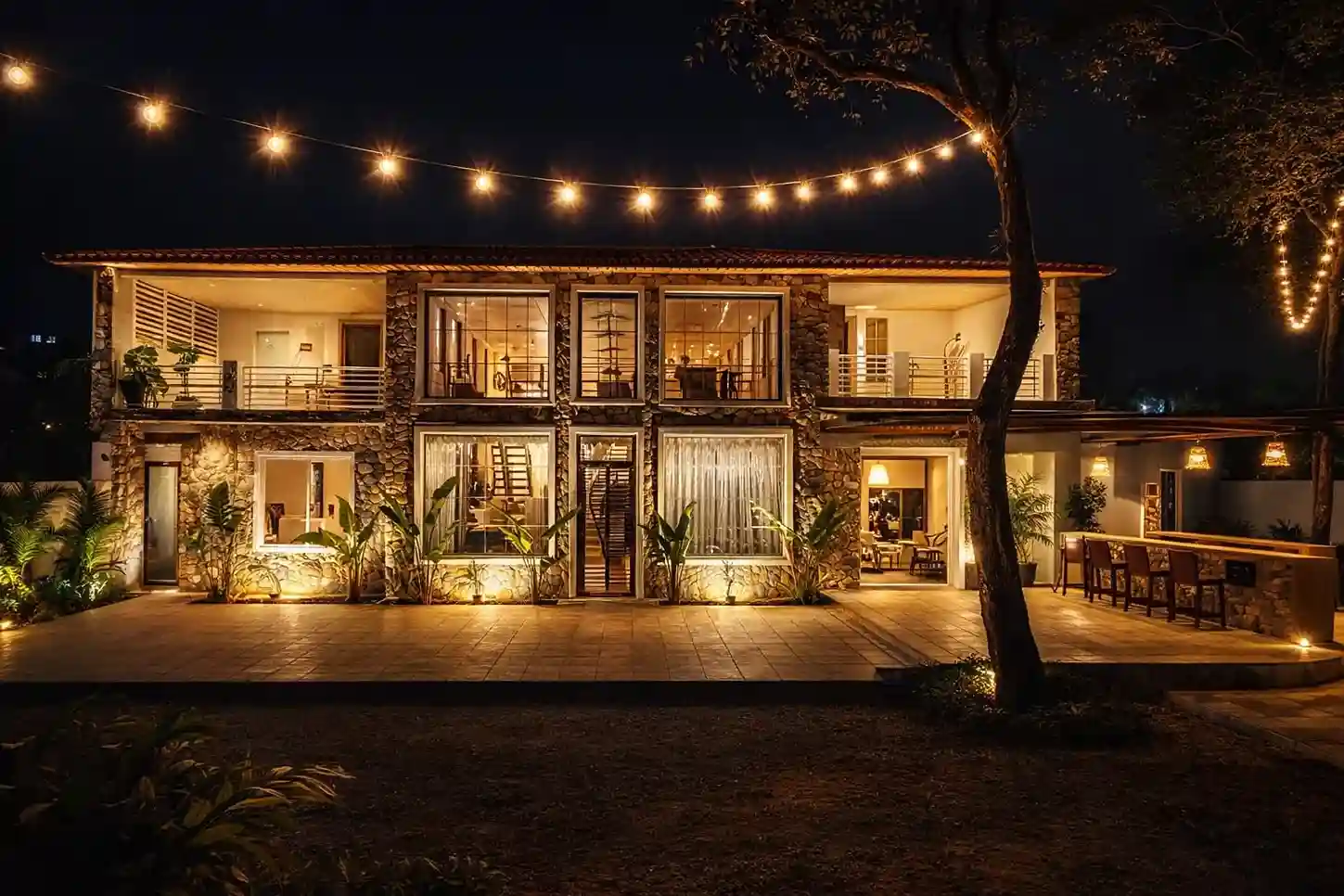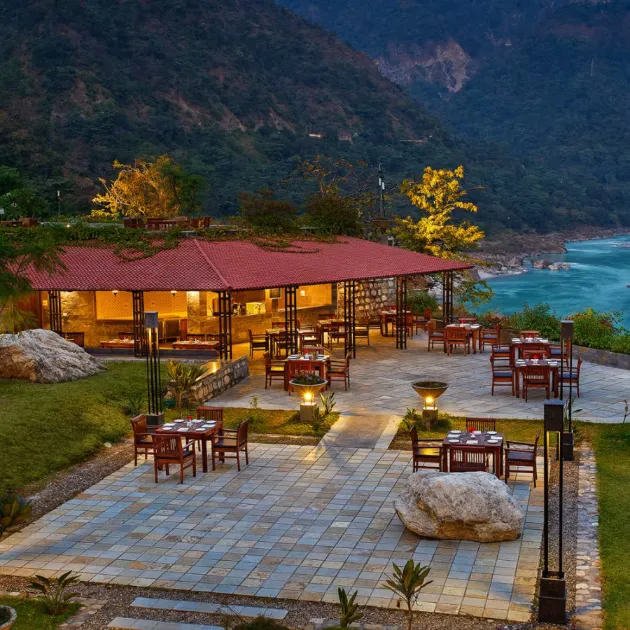
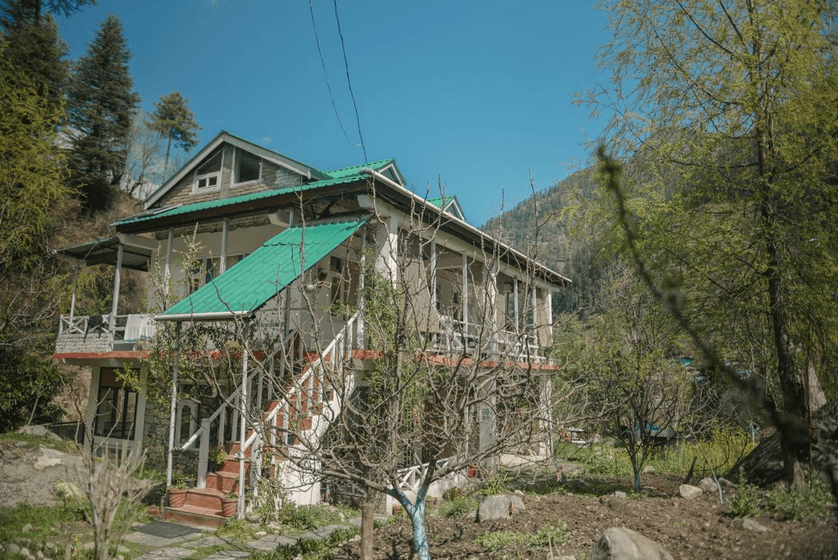
The best mornings in Jibhi start with the river. You hear it before you see it, a steady rush under the deodar trees, and it’s still there when you carry your tea out to the garden. A good homestay in Jibhi puts you right next to that sound instead of a drive away from it.
That’s the idea behind the Riverside Homestay with Book Cafe, one of the stays we run in Jibhi. Rooms by the river, a garden, a bonfire spot and a cafe where you can sit with a book and a view. But before the property, a fair question: why a homestay and not a hotel?
Why a Homestay in Jibhi Beats a Hotel
Jibhi isn’t a hotel town. There are only a few hotels, and the ones you’ll find are small and simple: a row of rooms, a common dining area, maybe a balcony. No lift, no room service, no gym, no 24-hour front desk. So the choice here isn’t “homestay for charm, hotel for services.” In Jibhi, both are simple stays. What changes is how the stay feels.
At a hotel, you get a room and a corridor. At a homestay, you get a place to settle into: a garden to sit in, a bonfire that starts when you want it to, a cafe to read in, and a host who’s around if you need anything. Breakfast can be late if you want it late. And if you’d rather cook your own meals, there are rooms with a kitchen.
The food is different too. A hotel in the hills usually runs a fixed menu at fixed hours. A homestay cooks for the people staying, so you can ask for what you feel like, tell them what you don’t eat, and sit down to something that tastes like where you are.
Then there’s the host. Someone who lives in the valley knows which trail is dry this week, whether the road to Jalori Pass is open, and which cafe in Banjar is worth the trip. A front desk rarely knows that.
Setting matters most of all. Hotels tend to sit close to the road and the village centre. A riverside homestay sits down by the water, so the sound of the stream is the background to your whole stay.
It works well for groups too. Friends or families can book several rooms together and stay side by side, instead of being spread across a hotel, sharing the same garden and the same bonfire in the evening.
A hotel still makes sense if you’re stopping for just one night on the way somewhere else. For anything longer, a homestay fits Jibhi better.
The Riverside Homestay With Book Cafe
This is a riverside homestay with mountain and garden views, built around its rooms. Every bedroom has its own bathroom, hot water and heating, which you’ll appreciate from October to March. You can book a single room, a room with a kitchen if you’d like to cook, or take the whole property if you’re a big group (it sleeps up to 16). Check-in is from 1:00 PM and check-out is by 11:00 AM.
The book cafe is what makes it different. Instead of a plain dining room, there’s an on-site cafe and reading corner, the kind of place where you can lose an afternoon with a book and something warm to drink. It suits Jibhi, where the best plans are often no plans.
Outside there’s a garden and a bonfire area, and evenings here are cold even in summer, so the fire gets used most nights. The practical bits are covered too: power backup, private parking, toiletries, and cutlery and gas in the rooms with a kitchen. Breakfast can be added to your stay.
Things to Do Around Jibhi
Jibhi rewards slow days, but there’s enough to fill three or four. Walk to Jibhi Waterfall in the morning, before the picnic crowds arrive. Spend a full day on Jalori Pass and the trek to Serolsar Lake, roughly 11 km up from Jibhi and the best day out in the area, but check road and weather conditions first. Visit Chehni Kothi, the tall wooden-and-stone tower in the old village style, or head to Tirthan Valley and the Great Himalayan National Park for trout streams and birdwatching. Or do nothing at all. A book at the cafe, a walk along the river and a bonfire in the evening is a perfectly good itinerary.
Best Time to Visit
March to June is pleasant, with cool evenings and apple blossom in spring, though May and June are the busiest months. July to September is monsoon: green and misty, but heavy rain can bring landslides and road closures, so check conditions before you travel. October and November are clear and crisp with fewer crowds, and are among the best months to visit. From December to February it’s cold, with snow at higher altitudes including Jalori Pass. The rooms have heating, and the bonfire earns its keep.
Getting to Jibhi
Jibhi is in Himachal Pradesh’s Seraj Valley, close to Banjar. From Delhi it’s about 500 km by road, roughly 12 to 14 hours. From Chandigarh it’s about 280 km, around 8 to 9 hours. The nearest airport is Bhuntar (Kullu), around 60 km away. Mountain roads slow things down, especially after rain, so leave early and plan for the drive to take longer than the map says.
Homestay Dos and Don’ts in Jibhi
A homestay is someone’s place, in a quiet valley with limited services. A few habits make the stay better for you and for the people hosting you.
Do
Tell your host your arrival time and group size. Mountain roads are unpredictable, and the host can plan food and keep the rooms warm.
Order meals in advance. Ask what’s cooked, what’s vegetarian or Jain, and when dinner is served. Hill kitchens don’t run like city restaurants.
Pack warm layers. Evenings by the river are cold, even in May.
Carry some cash and offline maps. Mobile network and UPI can drop in the valley.
Ask your host for local tips: which trails are open, when the waterfall is quietest, where to eat in Banjar.
Book early for May, June and December, the peak months.
Leave a buffer for the drive. Start early, expect delays after rain, and aim to arrive before dark.
Keep the place the way you found it, and carry your plastic out if you go trekking.
Don’t
Don’t expect hotel-style service on call. There’s no room service or 24-hour desk, so ask in advance if you need something.
Don’t play loud music late. Sound carries across a quiet valley, and there are neighbours and wildlife around.
Don’t go into the river after rain or when the water is high. Mountain streams rise quickly, so stay out unless your host says it’s safe.
Don’t leave the bonfire unattended. Keep kids and loose clothing away from it, and make sure it’s out before bed.
Don’t pick fruit, flowers or crops without asking. The orchards belong to local families.
Don’t rely on fast Wi-Fi. Treat the stay as a chance to switch off, and download what you need before you arrive.
Planning your Jibhi trip? Message us on WhatsApp with your dates and group size, and we’ll suggest the best homestay in Jibhi.